THE FRAMEWORK
The Relationship Reset™ Logo

4 PHASES. IN THE ORDER THAT ACTUALLY WORKS.

You can't fight the real fight when you're still bleeding out. You can't close the distance when the mental load is still unbalanced. The sequence is the method — each phase makes the next one possible.

01
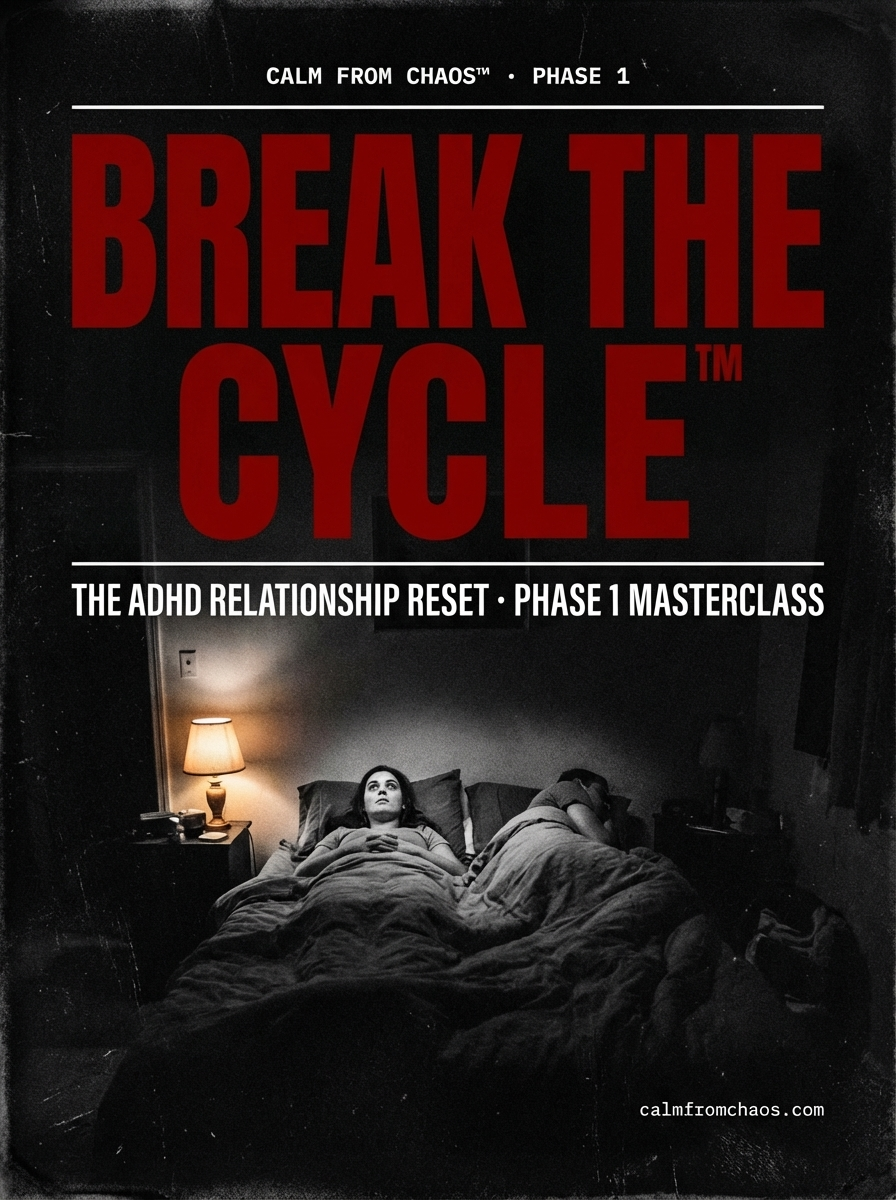
Phase 1 — Break The Cycle

BREAK THE CYCLE

Your nervous system isn't the problem. It's the starting point.

What's Happening

Both nervous systems are stuck in a feedback loop. The ADHD partner swings between under- and over-stimulated — shutting down or exploding with little warning. The non-ADHD partner has been in low-grade vigilance for months, scanning for the next dropped ball. Neither can hear the other clearly because their nervous systems aren't in a state where clear hearing is possible.

The Rule

Regulation before resolution. You can't problem-solve your way out of a flooded state. You can only calm your way out of it — and then talk. This phase gives you the tools to do that, starting this week.

The Tools

  • The 20-Minute Pause Protocol

    Every argument has a point where it stops being about the issue and starts being about survival. The Pause Protocol gives both partners a way out of that moment — before it does damage that takes days to repair.

  • The Daily 10

    Most couples only talk when something needs fixing. The Daily 10 creates a daily moment of contact that has nothing to do with problems — and everything to do with reminding two nervous systems that the other person is safe.

  • Escalation Signal Mapping

    By the time most couples realise a conversation has gone wrong, it's already too late to pull back. This exercise teaches both partners to read their own warning signs early enough to actually do something about it.

  • The No-Escalation Window

    Some arguments don't start because something went wrong — they start because it's Sunday evening. Identifying the predictable flashpoints and designing around them removes entire categories of conflict from your week.

Also Includes

A structured 7-day implementation plan so you're not figuring out what to do first. Most couples feel a measurable difference within the week — not because the problems are solved, but because the exit route finally exists.

02
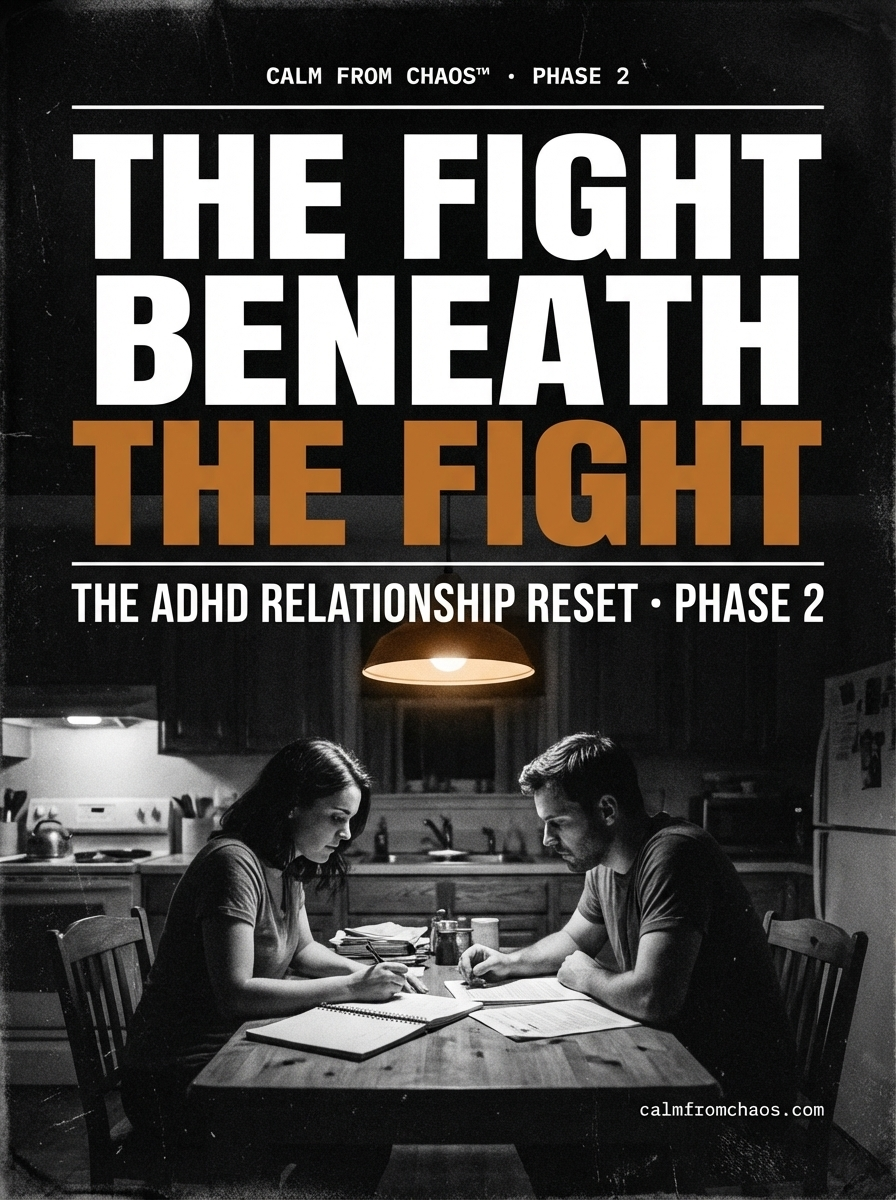
Phase 2 — The Fight Beneath The Fight

THE FIGHT BENEATH THE FIGHT

Understand the invisible biology running your arguments.

The Rule

Biology explains behaviour. It doesn't excuse it. This phase isn't about letting anyone off the hook — it's about replacing the story of character flaws with a more accurate one about patterns and nervous systems, so you stop fighting the person and start working on the pattern together.

What Changes

When you can trace an argument backwards to the exact moment one partner's signal activated the other's alarm — the Ignition Point — you stop being surprised by the pattern. And when you're not surprised, you can interrupt it. That's what this phase builds.

Three Concepts That Change How You Interpret Everything

Dopamine & Motivation

Why the ADHD brain can spend four hours on something it loves and forget a task it agreed to that morning — and why "just try harder" has never worked and never will.

Executive Function

The reason inconsistency isn't selective effort. Why the same person who planned your entire holiday can't reliably put the bins out — and what that actually means for your relationship.

Rejection Sensitive Dysphoria

The least understood and most destructive pattern in ADHD relationships. Once you know what it is, you'll see it everywhere — and you'll finally understand why a mild comment can detonate a conversation in seconds.

The Tools

  • The Conflict Pattern Map

    You keep having the same argument. This tool shows you exactly where it starts — and it's almost never where you think. Once you find the Ignition Point, the pattern loses most of its power.

  • The Intent vs. Impact Worksheet

    Most relationship damage isn't caused by malice — it's caused by a gap between what one person meant and what the other experienced. This worksheet closes that gap, and gives you a way to talk about it without the conversation becoming the next argument.

  • The Reframing Tool

    The stories you tell yourself in conflict are almost certainly wrong. This tool replaces them with more accurate ones — before the conversation starts, when it can actually do some good.

03
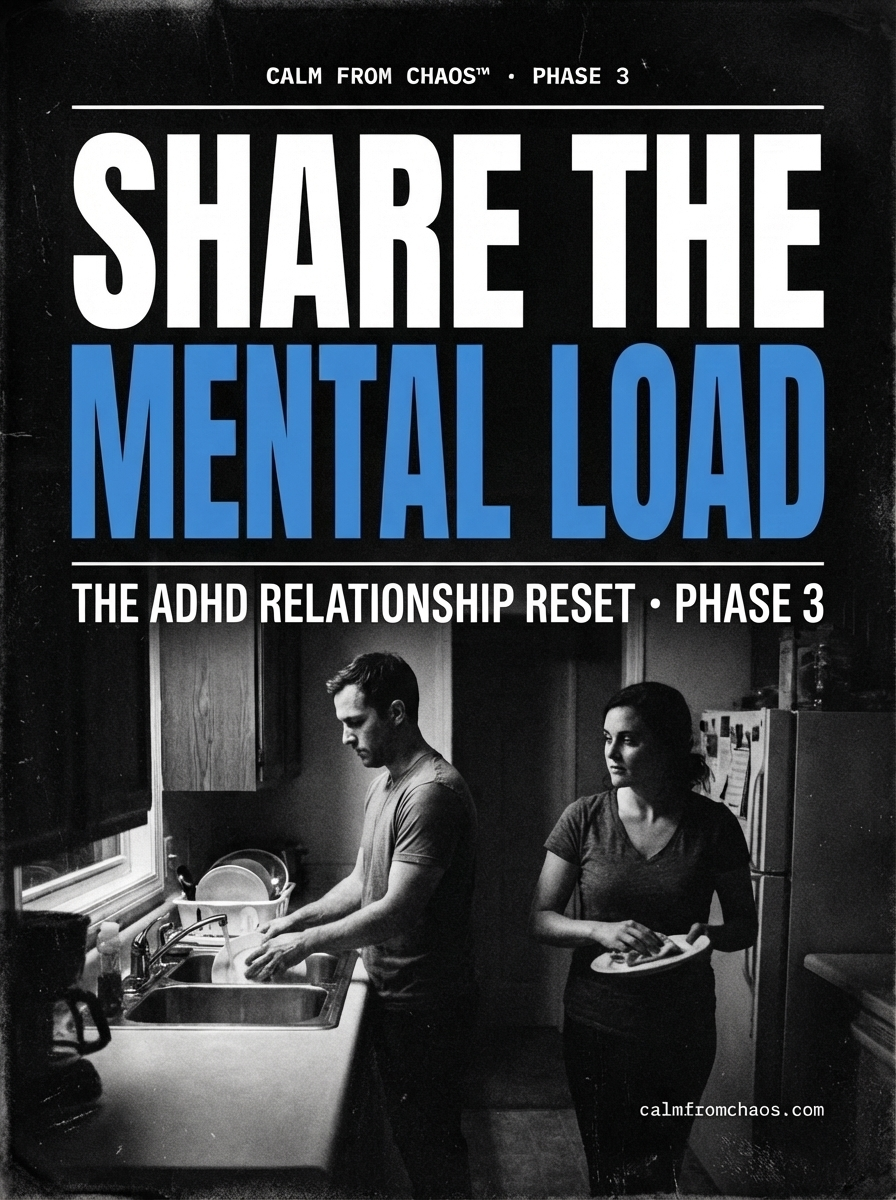
Phase 3 — Share The Mental Load

KILL THE MENTAL LOAD

Structure reduces shame. External systems reduce conflict. Consistency rebuilds trust.

The Problem

The non-ADHD partner is carrying the mental load — not just the tasks, but the noticing, planning, tracking, and following up on everything. This runs in the background of their mind all day, every day. The resentment it builds is slow, quiet, and by the time it fully surfaces it's been accumulating for years. Meanwhile, the ADHD partner knows they're falling short and can't figure out how to fix it.

The Rule

Structure reduces shame. External systems reduce conflict. This phase doesn't ask anyone to try harder — trying harder is an instruction that has already failed dozens of times. It redesigns how your household operates so it runs on structure rather than one person's memory, vigilance, and goodwill.

The Tools

  • The Ownership Model

    The reason reminders don't work is that reminding someone is just doing the mental work for them. The Ownership Model makes one person fully responsible for a domain — end to end — in a way that doesn't require monitoring, nagging, or goodwill to sustain.

  • The Responsibility Reset Meeting

    Most couples have never actually laid out who does what. They've just accumulated habits — usually with one person carrying far more than they should. This meeting makes the invisible visible, and gives both partners a fair starting point for what comes next.

  • The Minimum Viable Promise

    Trust doesn't come back through grand gestures. It comes back through small kept commitments, stacked up over time. The MVP framework is specifically designed for that — setting the bar where it can actually be cleared, consistently, so the evidence starts to accumulate.

  • ADHD-Friendly System Design

    Willpower and memory aren't the right tools for this. This section shows you what is — practical, proven systems that remove the executive function requirement from daily tasks so follow-through stops depending on intention.

04
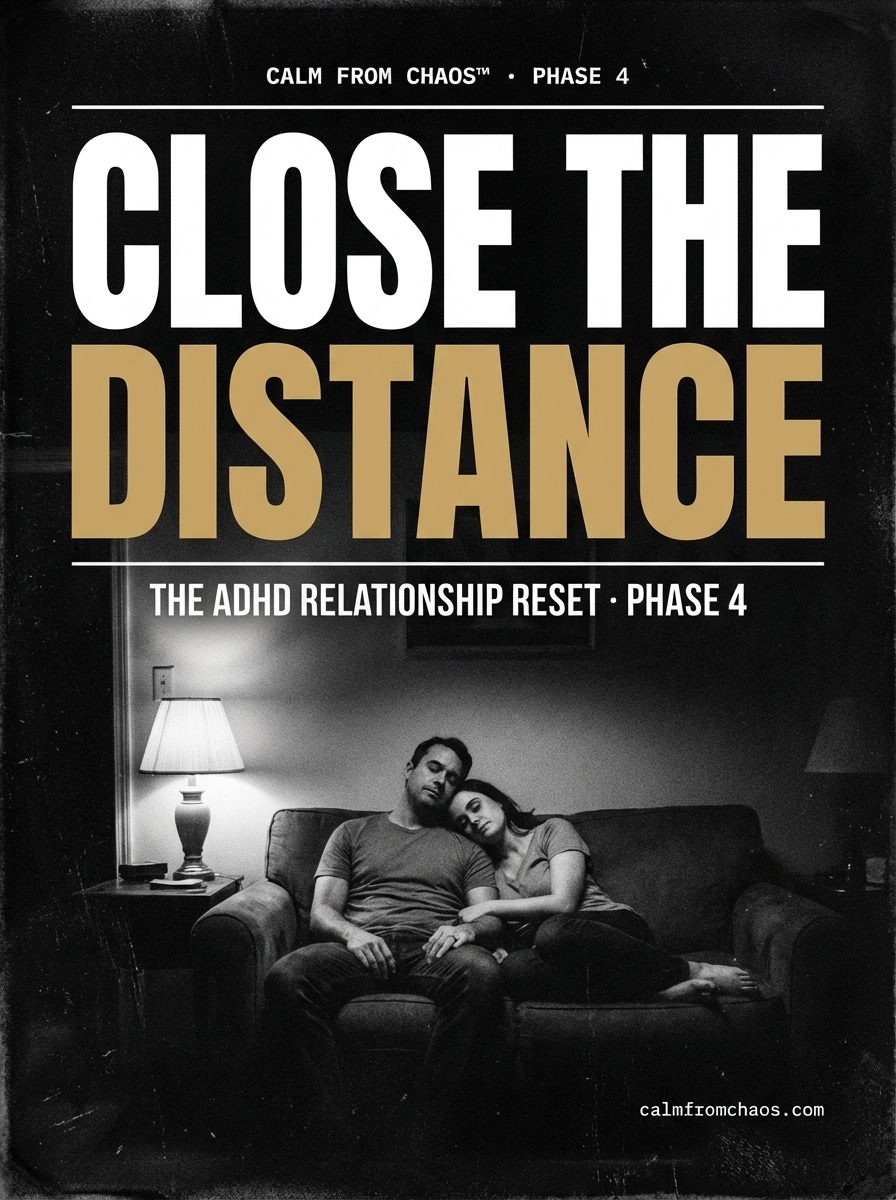
Phase 4 — Close The Distance

CLOSE THE DISTANCE

Safety before spark. You can't force connection — but you can build the conditions for it.

Why Intimacy Doesn't Come Back on Its Own

When the nervous system registers a relationship as chronically stressful, it conserves resources. Warmth, desire, and curiosity are metabolically expensive — the brain deprioritises them. This is why couples who've been through long conflict describe feeling flat or numb even after things have calmed down. The nervous system doesn't immediately recognise that conditions have changed. It needs consistent evidence, not grand gestures.

The Rule

Safety before spark. Felt safety — where your nervous system registers the relationship as a place where it's safe to be open — isn't created by a dinner reservation. It's built through consistent, low-stakes interactions that accumulate over time. The tools in this phase are brief, repetitive, and deliberately undramatic. That's exactly why they work.

The Tools

  • Emotional Safety Rituals

    Three brief daily practices that do something a romantic dinner never can: teach your nervous systems, through repetition, that the other person is safe. Small on purpose. Consistent by design.

  • The 12-Minute Weekly Check-In

    Not a problem-solving session. Not a debrief. Twelve minutes, same time every week, to take the temperature of the relationship before the distance builds. Short enough that skipping it is a choice, not a necessity.

  • The Repair Conversation

    Apology and repair are not the same thing. One acknowledges wrongdoing. The other actually restores the connection. This structured script is specifically designed for ADHD relationships — where many ruptures aren't clear-cut wrongs, just accumulated damage that needs a real way back.

  • The 15-Minute Connection Ritual

    Not a date. No logistics, no effort, no roles. A protected window where neither partner is the one who manages or the one who forgets — just two people who chose each other, with no agenda. Couples who do this weekly consistently describe it as the thing that most reminded them why they're together.

  • The Relapse Plan

    Old patterns come back. Having a plan before they do means you respond instead of spiral. This three-level protocol turns a setback from "we're back to square one" into evidence that you know exactly what to do next.

A Final Note

Closing the distance is not the same as returning to the beginning. The beginning had chemistry and the electricity of not yet knowing someone. That's not what you're rebuilding.

What you're building is something harder to find and more durable: a relationship that has been through difficulty and is still choosing itself. Partners who know each other's nervous systems, each other's genuine attempts and genuine limitations — and who have decided, with that full knowledge, to stay present. That is what connection looks like after it's been rebuilt.

You've read the method. Here's where it starts.

Phase 1

Stop The
Bleeding

01

Phase 2

The Fight
Beneath

02

Phase 3

Kill The
Mental Load

03

Phase 4

Close The
Distance

04

Phase 1 is available tonight. The rest unlocks as you go.

Start Tonight

YOU JUST
READ IT.
NOW DO IT.

The method only works if you start. Phase 1 is two hours. You can watch it tonight and use the Pause Protocol before the week is out.

Most couples feel a difference in the first week. Not because the problems are solved — because the exit route finally exists.

2hrs

Phase 1 runtime

Week 1

First shift

30 days

Full refund if not

Most people start here

The Mental Load Reset™ Masterclass
$97 one-time · lifetime access

The Mental Load Reset™

90 minutes video · one tool per phase

Pause Protocol — word-for-word scripts

The Mental Load Map worksheet

$97 credited toward full course

GET THE MASTERCLASS — $97 →